February 13, 2012

The Bottoms ***

*** The Bottoms, Joe R Lansdale, 2001

This one won the Edgar award for Lansdale. The usual disclaimer applies, not as much as a Hap and Leonard book, but more than A Fine Dark Line. The story of a serial killer in 1934 East Texas back before the term was invented, told through the eyes of a pre-teen son of the constable.

The voice is perfect and the writing and characters are prime Lansdale material.

I felt it moved a bit slow for a thriller, with the investigation moving in fits and starts as circumstance advanced it. It came to a complete stop when Grandma showed up, and again when the father escaped in a bottle.

Normally, the hero would advance the plot, but the protagnist is a pre-teen kid who can't really advance the plot of a multiple murder investigation and the investigator is a backwoods constable with know training, experience or knowledge in how to investigate. Consequently, happenstance is the main engine to move things forward, which is not as satisfying as a pro-active protagonist.

I guessed the killer early on, but the writing was strong enough to carry the story even so.

Interesting that the book won the Edgar, as I wouldn't have thought of it as a potential winner. Maybe I should consider submitting Muffin Man.

February 9, 2012

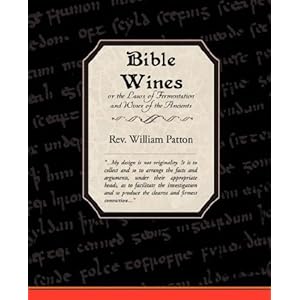
Bible Wines or the Laws of Fermentation and Wines of the Ancients ***

*** Bible Wines or the Laws of Fermentation and Wines of the Ancients, Rev. William Patton, 1871

It was clear from the title page, which indicated this book was published by the National Temperance Society, what I would find inside. However, despite the fact that it was written 140 years ago, I found it refreshing in many respects, particularly this sentiment from the introduction from which other writers in this review should have taken a cue from (emphasis mine):
"My reasonings are conducted in candor, and with due respect to those from whom I am constrained to differ. Their views are carefully stated in their own chosen language, and their quoted authorities are fairly given. When their relevancy is questioned or their inferences shown to be illogical, no suspicion of motives has been allowed. Truth gains nothing by asperities."
Despite the fact that this book is older than all the others I read by over 100 years, it was the most compelling for the case of abstinence. It's not easy to read, but I recommend for anyone who wants to dig deep in this subject. I'm not completely convinced, but this honest and respectful approach is far, far better than the snarky arguments of 21st century writers.

My take: WWJD

February 6, 2012

Hunger Games ****

**** Hunger Games, Suzanne Collins, 2008

I've seen all the hype about Hunger Games for the past few years, but I tend to discount hype and I had plenty of things I needed to read, so I didn't bother to check it out. But I saw the trailer for the movie and thought perhaps I should check it out before the movie came out. I saw it was under $6 on the Kindle, so I grabbed it and read it in a weak moment.

Wow. That's all I can say. Wow. This is a rare case of the hype being justified.

I guess I can say a little more, but Wow. The writing is good from the start, but when the games begin it becomes almost impossible to put this thing down. And the final battle in the games, holy freaking cow! I understand this to be a YA book, but man is it gnarly. I'm not a fan of movie violence, so who knows if I'll do the movie or not. Probably. We shall see.

Bottom line: Worth the read.

***Spoiler alert***: There was one thing that bothered me about this book: How the protagonist doesn't snap to the fact that the romantic interest from the other tribute is sincere. It took her way to long to realize he was legit.

EBOOK FORMATTING ****

Why it matters.

The ebook version was flawless. Didn't see a single typo, formatting issue or navigation problem. I can't rate the next/last chapter navigation from the 5-way navigation pad because I upgraded to the Kindle Touch, which doesn't have any buttons. I kind of miss being able to skip forward or backward a chapter, and I miss being able to change the orientation to landscape, but other than that, love the Touch.

February 2, 2012

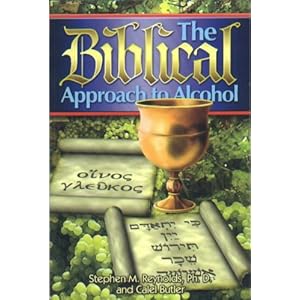
The Biblical Approach to Alcohol *

* The Biblical Approach to Alcohol, Stephen M. Reynolds and Calel Butler, 2003
These books are starting to wear on me. That's the danger of reading books by preachers. They have no interest or experience in expressing an idea with an economy of words. In addition, this book needs a good going over for organization. It seemed to be a list of vignettes thrown down as Reynolds thought of them in random order, which made it more difficult to build a solid understanding of the larger picture.

But there were several things that stood out for me and made me think, "You're serious about this? Really?" How about this quote:

"God left a number of things somewhat difficult to perceive as a test of spiritual perception of Bible readers. [Section about Jesus being the Messiah.] In the same way God may have left His true teaching concerning alcoholic beverages with what the undiscerning find to be ambiguities. This may have been with the view of separating the spritually perceptive (those whose ears are attuned to the true testimony of the Holy Spirit) from those whose perceptions are made dull by some sin which they cherish. Such a separation of those who take advantage of paradoxes in order to indulge their fleshly appetites may be used by God in judging man."

Really? You're saying God intentionally inspired an ambiguous message on alcohol so he could jerk believers around as a test to see who is really serious? Here's another passage 80 pages later:

"He may have left the teaching concerning the command to total abstinence somewhat obscure as a test to determine who among those who profess to believe in Him would discern His true meaning. Some, understanding that alcoholic beverages are a Christian liberty, overindulge themselves to the point of total ruin; others become soft and flabby in their Christian warfare; others who are teachers of religion mar their record by giving the people who follow them bad instruction. In the end God accomplishes His purpose of sorting wheat from chaff, and in grading how much each servant made from his talent, or talents."

God uses intentional ambiguity on the subject of alcohol to separate the wheat (saints) from the chaff (damned)? This gets even more absurd when, as we see later, that even people who agree on total abstinence disagree on the meaning of specific uses of the original language. And notice the repeated use of "may" in both passages, which leads me to the next complaint.

While these books frequently make good points, many of them don't seem content to leave it at that, but seem compelled to descend into speculation to drive the point home.

For example, regarding the miracle at Cana, Reynolds speculates that Jesus and Mary arrived late, and that unlike Mary, Jesus perceived that the crowd was drunk. He says this explains why Jesus reacted with outrage when Mary suggested he help out the steward with his wine problem. He also speculates that Jesus left quickly after creating 180 gallons of grape juice because he wouldn't hang out around drunk people.

Honestly, how can you take a book seriously when the author just makes up crap out of whole cloth and presents it straight-faced alongside serious research into the original languages? It destroys any credibility that might be left after the "God is jerking you around" statement.

I readily admit in WWJD that I'm no Biblical scholar and can't research back to the original languages. However, Bacchiocchi and Reynolds are Biblical scholars, so I paid attention to their exposition on the original words. I learned that there are two Hebrew words translated to wine in the OT, tirosh and yayin and one word in the NT, oinos. There one word translated to strong drink, shekar.

From Bacchiocchi I learned that tirosh always means grape juice. This was foundational to his position. On the other hand yayin and oinos sometimes mean grape juice and sometimes wine, depending on the context. And shakar always means fermented drink, except in one passage where it would be inconvenient if that were the case, so in that passage it means grape juice. He goes to great lengths and many pages to talk his way around this one exception, even though it seemed to me, the complete doofus in Hebrew I admit, that it was more handwaving than substance.

On the other hand, from Reynolds I learned that all of the words, tirosh included, can mean either wine or grape juice. The fact that tirosh could swing either way was very important to his point. So I'm left thinking, if these two scholars can't figure it out, what hope do I have of coming to a solid conclusion based on the original languages? Is God really going to judge whether I'm wheat or chaff based on whether I figure out what these two scholars can't agree on?

These two also seem to enjoy engaging in circular reasoning, which occurred repeatedly in both books. One example goes like this:

  1. We will search the original language to see what is the attitude of the Bible toward drinking fermented (alcoholic) drinks.
  2. In the original language, tirosh always means grape juice (or doesn't necessarily, if you're Reynolds) and always is used in positive references.
  3. In the original language, yayin sometimes means wine and sometimes grape juice. You can tell which by the context. If it's a negative reference, yayin means wine. If it's a positive reference, yayin means grape juice.

You see the problem here? In step three we have the problem of deciding which references mean wine. We solve that problem by assuming that if the reference is negative, it means wine. But that is begging the question, assuming the thing we're trying discover, which is what is the attitude of the Bible toward wine. So the exercise is completely useless.

Overall, there were some diverting sections, but much of the book was less than helpful. And, like Bacchiocchi, Reynolds takes a lot of space to talk about medical implications and social issues and several other things that have nothing to do with the scriptural position.

January 30, 2012

How To Lie With Statistics ****

**** How to Lie with Statistics, Darrell Huff, 1954

I read this book back in the 70s and loved it. Since it's been a while I thought I'd give it another read. Still good.

It's a lightweight course on how statistics can be used to misrepresent information. Even if math is not your strong suit, you can follow this book and learn how to find the weak spots in a statistic.

One downside is that all the examples are from the 1920s through the 1950s. For example, here's the beginning of Chapter 1:

"The average Yaleman Class of '24," Time magazine noted once, commenting on something in the New York Sun, "makes $25,111."

Well, good for him!

But, wait a minute. What does this impressive figure mean?

Even knowing we're talking about 1924, it's hard to see this as impressive. But eventually you adjust your head for a century back.

The other downside is that it doesn't take long for you to realize that you're never going to have enough information about any stat you see in a newspaper, magazine, TV show or the internet to know if it's legit.

But I can live with that.

January 26, 2012

Should Christians Drink?: The Case for Abstinence

Should Christians Drink?: The Case for Abstinence, Peter Masters, 1992

This one of two books in the list that was published before my 1996 essay. However, in a time before Amazon.com, books published by a small press in the UK were not readily available to geeks in Fred, Texas.

It became apparent after only a few pages that this book is not a dispassionate examination of the subject, but rather propaganda in the purest sense of the word, "the particular doctrines or principles propagated by an organization or movement." It in no way can stand next to Bacchiocchi's book as a serious inquiry into the subject, or even next to Libatique's work, which is bush league at best.

Chapter One established the foundation for a Christian version of situational ethics, destroying the credibility of any statement to follow. For example, when a book argues, as this one does on page 32 regarding the wedding at Cana that, "It is possible that the Lord may have made the wine in a diluted state, ready to serve," then it is apparent that we're in the full throes of an agenda fueld by speculation to support a preordained conclusion, not an honest inquiry in search of the facts of the case. I mean, I ask you, "What the heck?" And I use that term advisedly.

The speculations that follow this statement beggar the imagination. It was with great effort that I forced myself to continue, even though I was already one third of the way through the book. It seems that this book, for which I paid $9.99 plus shipping comprises less than 30,000 words. It would seem that a Fred ebook, three times as long for less than a third of the price, is a great bargain!

It was also interesting to see Masters advance a completely unbiblical interpretation of equating weakness in faith with reluctance to embrace legalism, in contradiction to the concepts I discovered and discuss in WWJD. However, I do have to credit him with a very clever conflation of Levitical rules and the priesthood of the believer. It would have never occurred to me to connect those particular dots.

Overall, this skimpy book is short on both volume and substance. Don't bother with it, especially if you're looking for a thorough examination of the topic rather than a predictable and boring sermon.

January 23, 2012

A History of the World in Six Glasses ***

*** A History of the World in Six Glasses, Tom Standage, 2005

I think I got this book on the Kindle Daily Deal. (If you have a Kindle, you should check it every day.)

Standage's theme is that you can track the ages through the successive prominence of six beverages: beer, wine, liquor, coffee, tea, and cola. He makes a compelling case. In fact, he shows that in many cases, the drinks themselves shaped history, and in the case of tea, a corporation wielded the power of government over a large portion of the glob and instigated the tax that fomented a revolution.

It's a fascinating read. I'm going to leave you with this rather lengthy quote from the end of the book about the original and possibly next global drink.

As much as 40 percent of the bottled water sold in the United States is, in fact, derived from tap water, though it is usually filtered and may have extra minerals added. America's two leading bottled-water brands, Aquafini and Dasani, are derived from municipal water supplies. And although many bottled-ater labels depict glaciers, crystal streams and ice-covered mountains, tjhese images do not always reflect the true origins of the water within. A study buy the National Resources Defense council, an American environmental lobbly group, found that one brand of bottled water, labeled as "pure glacier water," came from a municipal water supply. Another brand, claiming to be "spring water," with a label showing a lake and mountains, actually came from a well in a factory parking lot, near a hazardous wasted dump. The study also noted that in both Europe and the United States, the quality of tap water is far more stringently controlled than the quality of bottled water.

There is no evidence that bottled water is any safer or healthier than the tap water available in developed nations, and in blind tasting tests, most people cannot tell the difference between the two. The differences in taste between bottled waters exceed the difference in taste between bottled water and tap water. Yet people continue to buy bottled water, even though it costs between 250 and 10,000 times as much per gallon as tap water. In short, safe water has become so abundant in the developed world that people can afford to shun the tap water under their noses and drink bottled water instead. In contrast, for many people i nthe developing world, acess to water remains a matter of life or death.

EBOOK FORMATTING ***

Why it matters.

Full navigation, including TOC.

Proper chapter and paragraph formatting. However, problems with hypenated words were littered liberally throughout the book, manifesting as words being hyphenated even if they don't break between lines, such as "Attend-dants." Sometimes there would be a space instead of a hypen, which was even more confusing.

Proofreading. I only found a few typos, for example "guesrs" instead of "guests."

Overall, a decent job of ebook production, but it does illustrate my claim that ebooks are not proofread as closely as print books. I guarantee you no print book would leave a publisher with dozens of words with hypens or spaces in the middle of them.

January 19, 2012

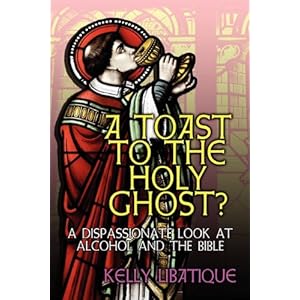
A Toast to the Holy Ghost? **

** A Toast to the Holy Ghost?, Kelly Libatique, 2010

I grabbed this one on Kindle after noticing some (possibly coincidental) similarities in the description and my 1996 essay on the topic. I read through it in a night and found it worthy in places, but laden with specious reasoning in others. For example, consider this passage:
"It is interesting to note that God knew perfectly well when inspiring the authors of the Bible that using an ambiguous word here (and in many other places) would cause centuries of debate. If He had wanted to make it clear one way or the other, He could have easily done so."

Am I to conclude from this passage that God knew his ambiguity would cause confusion and intentionally created ambiguity for that purpose? This sounds suspiciously like the "God placed dinosaur fossils in the earth to give the appearance of age" argument of creation over evolution. This and other similar issues left me feeling the book was less than helpful.

My take on the topic: WWJD

January 16, 2012

The Weed That Strings the Hangman's Bag ****

**** The Weed That Strings the Hangman's Bag, Alan Bradley, 2010

I bought this a few months ago but have been saving it as a treat to myself. I picked it up during the week between Christmas and New Year and forced myself to only read a little at a time so it would last the whole week. I finished it on Dec 30, so I was almost successful.

The second Flavia de Luce novel is just as well written as the first one, but it takes a little longer to get to the crime, which doesn't happen until page 151. But Flavia is entertaining even when there is no dead body, so that doesn't put any marks against it in my book.

Time to get A Red Herring Without Mustard. Only one released after that one, so I need to take them slowly to reduce the gaps between books.

January 12, 2012

Wine in the Bible **

** Wine in the Bible, Samuele Bacchiocchi, 2001

This is an exhaustive study of the subject from multiple viewpoints, delving down into the Hebrew, Greek and Latin with hundreds of footnotes, written by a Seventh-day Aventist theologian in his sixties. This book was a clear indication to me how just how superficial my analysis was. It is also a highly soporific approach and I am certain that the casual inquirer into the subject will never get past the 3 prefaces, the 8-page introduction (legal pages) and the 9-page second introduction. Chapter 1 shows up at page 28

Bacchiocchi proclaims at the outset to adopt a prohibitionist stance. I found a lot of the examination of the original language to be enlightening and worthy of reflection, but the ad hominem attribution of ulterior motives to scholars who translated things differently weakened his credibility, especially when he evinced the same propensities himself. In addition, in the problem passages and elsewhere there seemed to be a significant amount of begging the question.

All that notwithstanding, for a serious student of the issue it's worth a read for the analysis of the original language alone. Just keep your logical fallacy filters on high.

My take on the topic: WWJD